Back to blog home
Types of Security Cameras: A Complete Guide for Businesses
by Team Rhombus, on June 2nd, 2026
Physical SecurityTypes of Security Cameras: A Complete Guide for Businesses
Security camera type selection determines coverage effectiveness, deployment costs, and analytics capabilities for commercial installations. IT managers choosing dome cameras over bullets for retail environments gain vandal resistance but sacrifice long-range identification. Facilities managers deploying fisheye cameras in warehouses reduce equipment count but lose AI analytics precision compared to multisensor alternatives.
This guide defines every major commercial security camera type with specific deployment scenarios, technical specifications, and honest trade-off analysis. Security directors can reference exact coverage areas, resolution capabilities, and environmental ratings to match camera types to operational requirements.
The comparison framework eliminates vendor marketing language to focus on measurable performance differences between dome, bullet, PTZ, fisheye, multisensor, and mini camera categories. Each section provides actionable selection criteria for parking lots, retail spaces, perimeters, and sensitive areas where camera type directly impacts security outcomes.
Camera Type Comparison Table
| Camera Type | Best For | Coverage Area | Indoor/Outdoor | Key Strength | Typical Deployment |
|---|---|---|---|---|---|
| Dome | Retail, offices, lobbies | Wide-angle view | Both | Vandal-resistant, discreet profile | Ceilings in high-traffic areas |
| Bullet | Perimeters, parking lots | Long-range focused | Outdoor primary | Weather resistance, telephoto reach | Building exteriors, entry points |
| PTZ | Large facilities, stadiums | Variable zoom coverage | Both | Operator-controlled tracking | Security command centers |
| Fisheye/360° | Open spaces, retail floors | Complete panoramic | Both | Single camera covers entire room | Warehouses, shopping centers |
| Multisensor | Complex intersections | Multiple independent views | Both | Superior AI analytics precision | Building corners, courtyards |
| Mini/Covert | ATMs, sensitive areas | Close-range monitoring | Indoor only | Ultra-compact, hidden placement | Point-of-sale, restricted access |
Dome cameras excel in vandal-prone environments where aesthetics matter. Bullet cameras deliver maximum range for perimeter security. PTZ models provide active threat tracking but require dedicated operators.
Fisheye cameras reduce total camera count through 360° coverage, while multisensor models deliver better AI analytics across four independent views. Mini cameras disappear into sensitive environments.
Dome Cameras
Dome cameras mount flush against ceilings or walls inside a protective dome housing that conceals the lens direction from view. The dome design makes it harder for people to determine where the camera is pointing, creating a psychological deterrent effect while maintaining discreet surveillance coverage.
The vandal-resistant housing protects against tampering and impact damage. Select commercial models, including the Rhombus R410, carry an IK10 impact resistance rating. Many commercial outdoor-rated dome cameras carry IP66 weatherproofing, making them suitable for environments from retail stores to parking garages.
Dome cameras deploy via standard Power over Ethernet (PoE) cables that supply both power and data through a single connection. This plug-and-play installation eliminates separate power runs and reduces deployment complexity for IT teams.
Rhombus dome cameras include the R120 Mini Dome, R200 Mini Dome, R230 Wi-Fi Dome, and R410 Dome models. The R410 delivers 4K resolution with 3x optical zoom and 164-foot IR night vision range. Rhombus cameras support onboard edge AI analytics, with specific capabilities varying by model, reducing bandwidth consumption while enabling real-time alerts.
The R230 offers Wi-Fi connectivity for installations where cable runs prove challenging, while maintaining the same vandal-resistant design and AI capabilities as wired models.
Bullet Cameras
Bullet cameras deliver long-range visibility in weatherproof housing designed for outdoor perimeter monitoring. Their elongated cylindrical design houses powerful optical zoom capabilities and extended IR night vision, making them ideal for parking lots, building exteriors, and property boundaries where distance matters.
The weatherproof advantage sets bullet cameras apart from indoor-focused alternatives. Rhombus bullet cameras feature IP66 weather resistance, operating reliably in temperatures from -45°C to 55°C. This durability eliminates the seasonal maintenance headaches that plague less robust camera types.
Motorized zoom transforms bullet cameras into adaptable surveillance tools. The R545 Telephoto provides 11-28mm varifocal lens capability with 45°-18° diagonal field of view, allowing operators to zoom from wide-area coverage to detailed identification at distance. Standard models like the R540 balance zoom range with broader coverage for typical parking lot deployments.
Deployment Advantages
Single PoE+ cable installation simplifies bullet camera deployment compared to traditional systems requiring separate power runs. Rhombus models include up to 2TB onboard storage with 120 days of recording capacity, maintaining security coverage during network outages.
The compact R520 Mini Bullet handles access point monitoring where full-size bullets would be excessive. All Rhombus bullet cameras include onboard AI analytics processing, eliminating the bandwidth strain of cloud-based video analysis while delivering real-time alerts for perimeter breaches, vehicle detection, and suspicious activity patterns.
PTZ Cameras
PTZ cameras offer remote pan, tilt, and zoom control, allowing operators to track subjects and patrol wide areas from a single camera position. Security teams can manually adjust the viewing angle in real-time or program automated patrol patterns that sweep across multiple zones.
Traditional PTZ cameras excel in active monitoring scenarios where human operators need to follow specific incidents or suspicious activity. Manufacturing floors, large retail spaces, and public venues often deploy PTZ units at strategic positions where guards can actively redirect the camera’s focus based on security alerts or crowd management needs.
Most modern PTZ systems include preset positions, letting operators quickly snap to predefined angles like entrances, loading docks, or high-value areas. The zoom capability provides detailed identification of faces, license plates, or specific activities from considerable distances.
Rhombus takes a different approach with digital PTZ functionality on the R600 multisensor. Unlike mechanical PTZ, digital PTZ crops and magnifies within a fixed sensor image rather than physically redirecting the camera. Each of the four independent 5MP sensors on the R600 supports up to 2x digital zoom, providing flexible coverage without moving parts that require maintenance.
The distinction matters operationally: digital PTZ cannot reposition the camera’s physical field of view, but it eliminates mechanical failure points and mounts like a standard fixed camera. For deployments that require active physical redirection across wide areas, a dedicated mechanical PTZ remains the appropriate choice.
Fisheye and 360-Degree Cameras
Fisheye cameras capture 360-degree panoramic coverage from a single mounting point, using specialized wide-angle lenses that record everything around the camera simultaneously. The circular fisheye image gets processed through real-time dewarping software that converts the distorted view into multiple standard rectangular video feeds. This can significantly reduce blind spots in large open areas when properly mounted, and reduces the total number of cameras needed to monitor those spaces.
The Rhombus R360S fisheye camera delivers 12MP resolution across its full 360-degree field of view, with IP66 weatherproofing and IK10 impact resistance for indoor and outdoor deployment. Multiple viewing modes let operators switch between 360-degree panoramic, dewarped quad view, and immersive perspectives depending on what they need to see. IR night vision automatically activates in low-light conditions.
Fisheye cameras excel in retail stores, shopping malls, parking lots, and warehouses where general visibility matters more than detailed facial recognition or license plate capture. A single R360S can replace four traditional cameras at an intersection or cover an entire retail floor from a ceiling mount. The compact 130mm x 58mm profile makes installation discrete.
The trade-off is resolution distribution. While a fisheye camera sees everything, the image quality at the edges gets stretched and distorted compared to dedicated cameras pointed at specific zones. For deployments requiring precise AI analytics like face search or license plate recognition, multisensor cameras deliver better results by dedicating individual high-resolution sensors to each coverage area.
Multisensor Cameras
Multisensor cameras use four independent image sensors in a single housing to provide comprehensive coverage without blind spots. Each sensor operates independently with its own varifocal lens, allowing security managers to customize the field of view for each quadrant while maintaining detailed image quality across the entire monitored area.
Unlike fisheye cameras that capture 360-degree footage and dewarp it digitally, multisensor units deliver native high-resolution imagery from each sensor. This approach eliminates the distortion and resolution degradation common with dewarped fisheye footage, making multisensor cameras better suited for AI-powered analytics like license plate recognition and face search.
The Rhombus R600 combines four 5MP sensors for 20MP total resolution with advanced AI capabilities including vehicle recognition, license plate recognition (LPR), and face search. Each sensor offers 2x optical zoom plus 2x digital PTZ functionality, providing operators with detailed coverage of large areas from a single mounting point.
Installation simplicity sets multisensor cameras apart from traditional multi-camera arrays. A single PoE++ cable powers all four sensors and transmits data, reducing infrastructure complexity compared to installing four separate cameras. The R600 operates on 51 watts maximum power consumption while providing 100-foot IR night vision across its full field of view.
Multisensor cameras excel in applications requiring both wide-area monitoring and detailed AI analytics: building exteriors, public plazas, large parking lots, and manufacturing floors. They deliver the coverage benefits of multiple cameras with the management simplicity of a single device.
Mini and Covert Cameras
Mini cameras deliver inconspicuous surveillance in sensitive environments where standard form factors would be too visible or bulky. These compact units excel in tight spaces like ATM alcoves, retail self-checkout areas, museum displays, and reception desks where discreet monitoring is essential.
The Rhombus R150 exemplifies this category with plug-and-play installation and onboard AI analytics processing. Its low-profile design makes it virtually undetectable while maintaining full video quality and intelligent detection capabilities. The R150 includes the same 10-year warranty and automatic firmware updates as larger Rhombus cameras.
Indoor-Only Limitation
Mini cameras typically sacrifice weatherproofing for size reduction. The R150 operates indoors only, lacking the IP66 weather resistance found in dome and bullet models. This constraint limits deployment to interior locations but ensures optimal performance in controlled environments.
For audio capture, mini cameras pair with external sensors like the Rhombus A100 Audio Gateway since built-in microphones would compromise the compact form factor. This modular approach maintains the camera’s minimal footprint while adding sound detection when required.
Mini cameras work best when covert monitoring takes priority over long-range visibility or outdoor durability.
LPR- capable Cameras
LPR (license plate recognition) cameras automatically capture and analyze vehicle license plates using specialized AI algorithms. These cameras excel at vehicle access control, parking enforcement, and perimeter security where identifying specific vehicles matters more than general surveillance.
LPR cameras require precise positioning and dedicated optics to reliably read plates at vehicle speed and various lighting conditions. Most deployments focus on chokepoints like parking garage entrances, gate access points, and loading dock areas where vehicles naturally slow down or stop.
The technology demands high-resolution sensors and sophisticated AI processing to handle different plate formats, angles, and weather conditions. Rhombus delivers LPR as a native capability on the R600 multisensor camera, processing license plate data directly on the device without requiring separate LPR hardware or cloud processing fees.
Real-World LPR Applications
Manufacturing facilities use LPR cameras to automatically log vendor deliveries and employee vehicle access. Parking operators deploy them for automated enforcement and payment validation. Corporate campuses integrate LPR with access control systems to grant or deny entry based on pre-authorized vehicle lists.
Unlike basic motion detection, LPR provides actionable vehicle intelligence that integrates with broader security workflows. The R600’s four independent sensors can simultaneously handle LPR duties while providing standard surveillance coverage of the same area.
Key Features to Evaluate When Choosing a Security Camera
Resolution determines the clarity of recorded footage and your ability to identify faces or license plates. 4K cameras capture four times more detail than 1080p models, making them essential for forensic analysis and evidence collection. Lower resolutions work for basic monitoring but limit your investigative capabilities when incidents occur.
Night vision performance varies dramatically between infrared ranges and sensor quality. Professional cameras offer 100-164 foot IR ranges with automatic switching between day and night modes. Poor night vision renders cameras useless during crucial overnight hours when most break-ins occur.
AI analytics processing location affects both performance and privacy. Onboard edge processing keeps video data local and reduces bandwidth consumption, while cloud-processed analytics require constant internet connectivity. Rhombus cameras process AI analytics onboard, maintaining privacy and function during network outages.
Power delivery method impacts installation complexity and reliability. Power over Ethernet (PoE) eliminates separate power cables and provides more stable connections than wireless cameras. PoE+ supports higher-resolution cameras with motorized features, while basic PoE works for standard models.
Weather resistance ratings determine outdoor camera longevity. IP66 rating protects against heavy rain and dust infiltration, while IK10 impact rating withstands vandalism attempts. Indoor-only cameras fail immediately when exposed to moisture or temperature extremes.
Compliance requirements affect government and regulated industry deployments. NDAA Section 889 restricts federal agencies from procuring equipment from certain named vendors, including specific telecommunications and video surveillance manufacturers. TAA compliance meets Trade Agreements Act requirements for government procurement.
Warranty terms reveal manufacturer confidence in their products. Standard one-year warranties indicate commodity hardware, while 10-year warranties demonstrate enterprise-grade construction. Extended warranty coverage reduces total cost of ownership through included replacement programs.
How Rhombus Unifies All Camera Types on One Platform
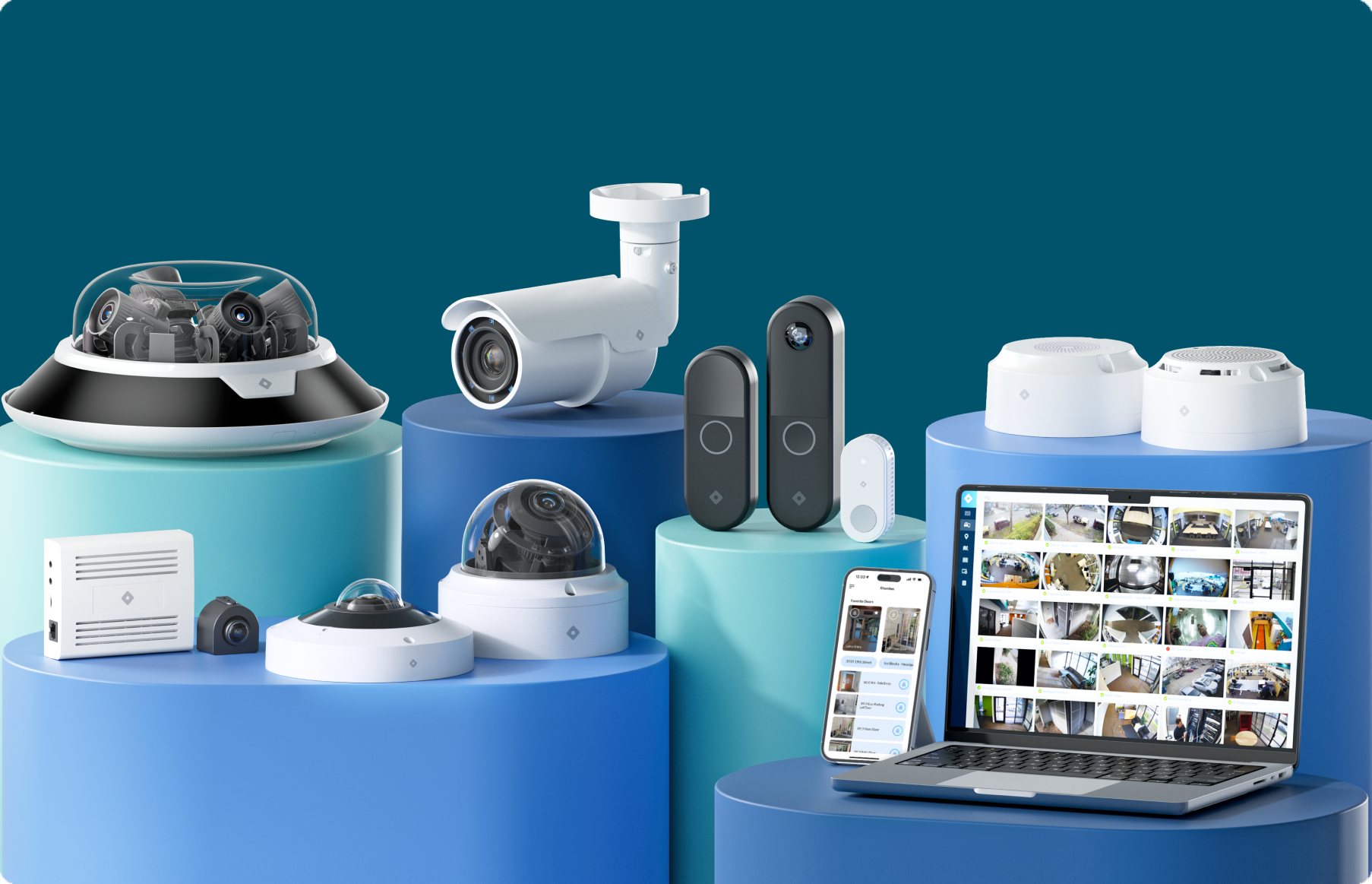
Rhombus delivers every camera type — dome, bullet, fisheye, multisensor, and mini — through a single cloud-managed platform that eliminates the complexity of traditional surveillance infrastructure. No NVRs, no DVRs, no separate management software for different camera models.
Every Rhombus camera processes AI analytics onboard at the edge, from vehicle recognition and LPR on the R600 multisensor to person detection across the entire product line. The platform delivers automatic firmware updates, ensuring your cameras gain new capabilities without site visits or manual patches.
When internet connectivity drops, cameras continue recording to onboard storage — up to 120 days on flagship models — then automatically sync footage when connection returns. This offline recording capability protects against the surveillance gaps that plague cloud-only systems.
The N100 Relay Connector integrates existing third-party cameras into the unified Rhombus interface, protecting legacy investments while standardizing management workflows. IT teams manage dome cameras monitoring lobbies and telephoto bullets securing perimeter fences from the same dashboard.
Rhombus backs every camera with a 10-year hardware warranty and same-day RMA replacement, eliminating the maintenance headaches and vendor fragmentation that complicate multi-camera deployments across different manufacturers.
Frequently Asked Questions
What is the most common type of security camera for businesses?
Dome cameras dominate commercial installations due to their vandal-resistant design and indoor/outdoor versatility. Their discreet profile makes them ideal for retail stores, offices, and public spaces where aesthetics matter. Rhombus dome cameras like the R410 combine this proven form factor with 4K resolution and onboard AI analytics.
What is the difference between dome and bullet cameras?
Dome cameras mount flush to ceilings with a low profile and 360-degree housing that conceals the lens direction. Bullet cameras project outward with visible weatherproof housings designed for long-range outdoor monitoring. Choose domes for indoor spaces and general coverage; choose bullets for perimeter surveillance and parking lots.
Do security cameras need internet to record?
Modern business cameras record locally to onboard storage during internet outages, then sync footage when connectivity returns. Rhombus cameras store up to 120 days locally and automatically resume cloud sync without data loss.
What resolution do commercial security cameras need?
4K (8MP) resolution can support identification at greater distances than 1080p when properly specified and installed. Actual performance depends on lens selection, pixels-per-foot, lighting conditions, and motion. Lower resolutions suffice for general monitoring but limit AI analytics precision at range.
What does NDAA compliant mean for security cameras?
NDAA Section 889 restricts federal agencies from procuring video surveillance and telecommunications equipment from certain named vendors. Many enterprises apply the same standard to their private deployments as a security baseline. Rhombus cameras meet both NDAA and TAA compliance requirements.
Conclusion
The right camera type depends entirely on your environment, coverage requirements, and analytics needs. Dome cameras excel in vandal-prone areas, bullet cameras dominate perimeter monitoring, and multisensor models deliver unmatched AI precision across wide zones. No single form factor solves every deployment challenge.
Cloud-managed platforms like Rhombus eliminate the complexity of mixing camera types by unifying dome, bullet, fisheye, and multisensor models under one system. Schedule a demo to see how different camera types work together in real deployments.
%20--%3e%3csvg%20version='1.1'%20id='Layer_1'%20xmlns='http://www.w3.org/2000/svg'%20xmlns:xlink='http://www.w3.org/1999/xlink'%20x='0px'%20y='0px'%20viewBox='0%200%20110%20110'%20style='enable-background:new%200%200%20110%20110;'%20xml:space='preserve'%3e%3cstyle%20type='text/css'%3e%20.st0{fill:url(%23SVGID_1_);}%20%3c/style%3e%3cg%3e%3clinearGradient%20id='SVGID_1_'%20gradientUnits='userSpaceOnUse'%20x1='25.325'%20y1='766.725'%20x2='84.725'%20y2='707.325'%20gradientTransform='matrix(1%200%200%201%200%20-682)'%3e%3cstop%20offset='0'%20style='stop-color:%23006F94'/%3e%3cstop%20offset='1'%20style='stop-color:%2300C1DE'/%3e%3c/linearGradient%3e%3cpath%20class='st0'%20d='M106.9,47.5L62.5,3.1c-4.1-4.1-10.9-4.1-15,0L3.1,47.5c-4.1,4.1-4.1,10.9,0,15l44.4,44.4%20c4.2,4.2,10.9,4.2,15.1,0L107,62.5C111,58.4,111,51.6,106.9,47.5z%20M55.5,71.2c-9.4,0.3-17-7.3-16.7-16.7C39.1,46,46,39.1,54.5,38.8%20c9.3-0.3,17,7.3,16.7,16.7C70.9,64,64,70.9,55.5,71.2z'/%3e%3c/g%3e%3c/svg%3e)
Related Articles